
Getting us there: $80–$180
The standard Sydney attendance fee. Ours is stated on the call, before you decide anything.
When water is coming through the ceiling, the useful question is not "who opens at eight", it is "who answers now". We do. Around the clock across Turramurra, a licensed plumber picks up, talks you through making it safe, and gets a crew moving.
Here is the test we give callers: is it spreading? Water spreading through a ceiling, waste rising in a floor drain, gas reaching more of the house: spreading problems are emergencies, because every hour of waiting is added to the repair bill. Static problems, a drip into a bucket, a slow drain with a second bathroom available, can usually sleep until daylight rates. Tell us what you see and we will sort it into the right column honestly.
The other half of the job happens before we arrive. Whoever answers your call talks you through the shut-off that stops the damage, the meter valve for water, the cylinder valve for a failing tank, evacuation and 131 909 for gas, so by the time the van reaches Turramurra, Warrawee, Pymble, St Ives or anywhere across the Upper North Shore, the situation is stable and the repair can start instead of the triage.


We would rather be straight about drive times than optimistic. Properties on the outskirts of Turramurra and out through Warrawee, Pymble, St Ives are further from the depot than the built-up streets, and at 3am the difference is real.
Large Ku-ring-gai blocks mean long lines from house to street, so a single blockage needs a CCTV camera to locate it accurately before we clear it.
What does not change is what happens on the phone: the isolation advice, working out whether it is safe to wait until first light, and an arrival window we will actually meet rather than one that sounds better.
Original earthenware gives way at the joints, and it rarely announces itself politely. Roots find the joint, the joint opens, and the section finally lets go on a night with the house full and one bathroom working.
Many heritage homes still run original earthenware pipes that crack and dislodge with age, letting roots and debris in and slowing every drain on the property.
Old pipe is not automatically bad pipe. But when a heritage-era line fails once, it is worth knowing whether you have had one bad joint or a tired run. We clear it, camera it before we leave, and you keep the footage: so any decision about relining is yours to make on evidence rather than on our word.
Heavy rain washes leaf litter and silt off Turramurra’s tree-lined gardens, choking stormwater pits and gutters that then back up over the yard.
If it is happening right now: stay out of moving water, lift what you can off the floor of the garage, and clear any grate you can reach safely from dry ground. Do not lift a surcharging pit lid, the water underneath is moving faster than it looks.
Once the rain stops, the pit that overflowed usually has a reason, and it is rarely the rain. Silt, roots or a collapsed section will do it, and the difference matters because one of those is a clean-out and the others are a repair.
Turramurra sits high on Sydney’s Upper North Shore (postcode 2074), a leafy Ku-ring-gai suburb of large blocks, heritage homes and streets that back straight onto Ku-ring-gai Chase National Park. Between the mature gardens off the Pacific Highway and the older homes near the rail station, its drains cop plenty of bushland tree roots, and we know the local ground well.
On a large block the run from the house to the connection point can be sixty metres or more, and all of it is yours. That is a lot of pipe with no street to inspect it from, crossing ground that vehicles drive over and trees grow beside.
It also means a blockage can sit a long way from anything you can see. A camera and a locator save real money here, the alternative is guessing, and guessing on a private line means digging.
Most homes around Turramurra have an overflow gully outside, a low grate, often near the back step, that nobody thinks about until it matters. It is deliberately set below the lowest fixture indoors so that when the line blocks, it spills into the garden instead of through your floor.
So a gully running in heavy rain is not a fault. It is the system doing its job and telling you the line downstream of it has stopped taking water. That is the moment to call, not after it reaches the hallway.
A yard that floods in every serious downpour is a different problem from one that flooded once in a freak storm. The first is a blocked or undersized line and it will keep happening; the second is weather.
Telling them apart takes a camera on a dry day, not a guess in the rain. If it has happened twice, book the inspection between storms, clearing a surcharging pit at the height of it costs more and tells you less.
The standard Sydney attendance fee. Ours is stated on the call, before you decide anything.
Business hours runs $120–$160; nights, weekends and holidays sit above it. That is the honest cost of a plumber on the road at 3am.
What most real after-hours jobs come to once attendance, the first hour or two and small parts are tallied.
Slab access, gas line work, walls opened overnight. Quoted to you in full before a tool comes off the van.
If your description says it can safely keep until morning, we say exactly that and book you at weekday rates instead. Ask.
The price is agreed before work starts, including at 2am. Figures here are indicative of the 2026 Sydney market rather than a quote from us, you get your own number as a fixed price before any work starts.
The person answering can actually help: what to shut off, whether it truly needs tonight, and a straight ETA for Turramurra.
Emergency vans carry the usual suspects, pipe, valves, hoses, drain machines, because a fix that waits for a supplier is not an emergency fix.
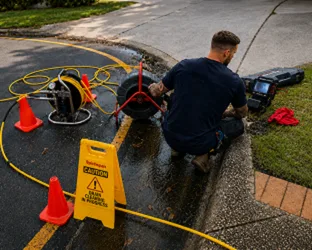
Damage stops first. Then the repair is priced, fixed, and you say yes or no with the number in front of you.

Almost always completed on the spot. Where a genuine part order is unavoidable, you are left sealed, safe and running until it arrives.
Describe it and let us make the call with you. Genuine can-wait jobs get booked at daylight rates, genuine emergencies get a crew now.
The phone is the fast lane, any hour. After-dark form enquiries ring the on-call plumber directly, nothing waits for office hours.

Leave your details and our local Turramurra team will call you back fast.